Paperwork is where freight loses days. Tide starts it before the ship does.
Commercial invoice, packing list, and bill of lading feed the entry the moment a shipment books. A licensed customs broker reviews the draft and files it under their own license, so the cargo clears the day it arrives instead of the week after.
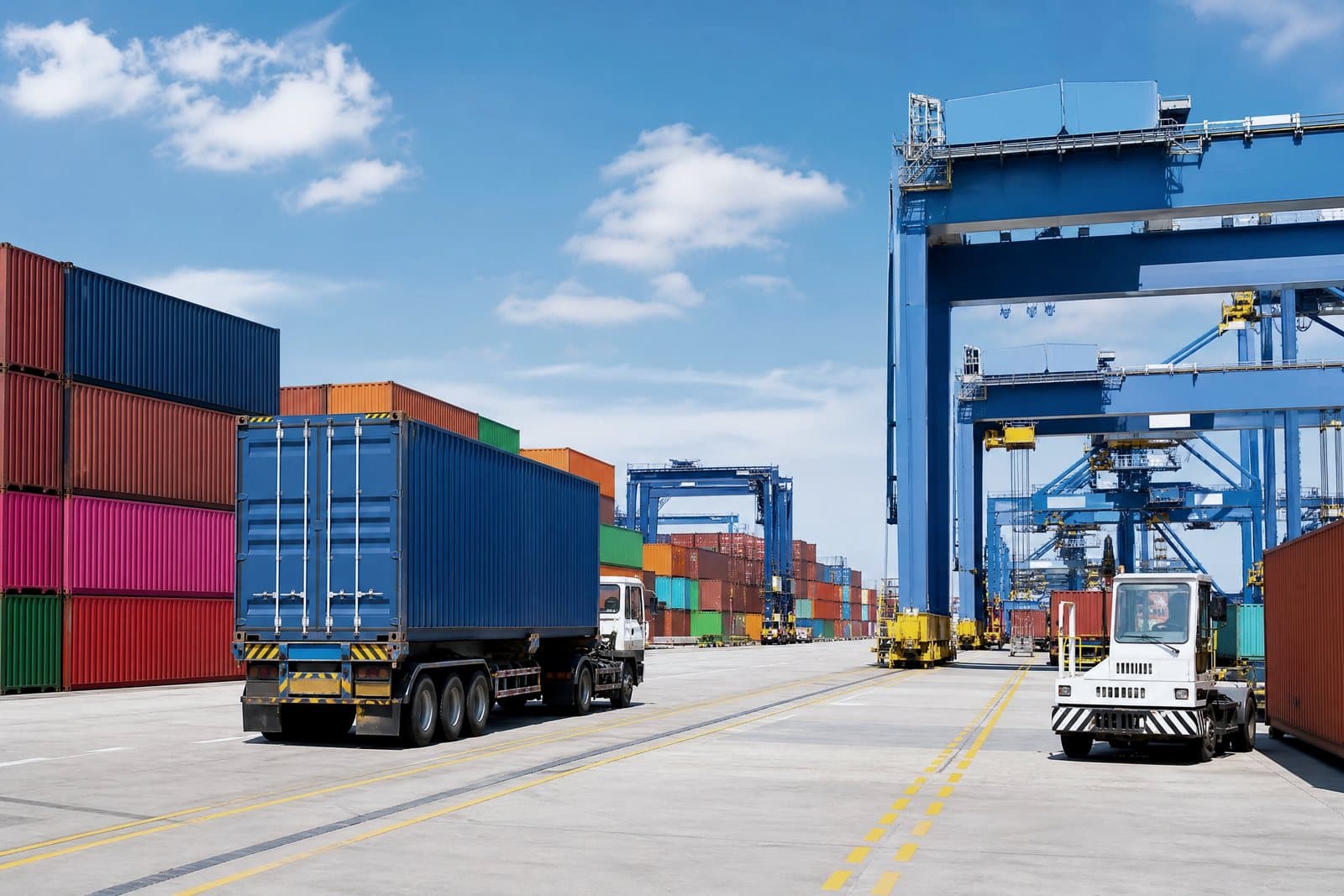
The filing, and everyone who touches it.
Four disciplines that used to live in separate broker relationships, now one record with the freight attached.
Entry filing and brokerage
Tide's agents assemble the entry from the shipment's own documents as soon as it books: commercial invoice, packing list, bill of lading, and the HS codes already on the record. A licensed customs broker reviews the draft against the underlying paperwork and files it under their own license. Nothing is transmitted to CBP without a person who is accountable for it signing off.
- ISF, entry, and entry summary filed
- Licensed brokers on every filing
- Draft ready before the vessel arrives
HS classification
The model proposes a tariff classification with a confidence score and the rule it applied, and a broker confirms or corrects it before it goes on the entry. Getting this wrong is the single most common source of overpaid duty and penalty exposure, so it never ships on model output alone.
- Confidence score on every proposal
- Broker confirms before filing
- Ruling history kept on the SKU
Duty drawback and refunds
Where a SKU qualifies, Tide tracks the export and import records that make a drawback claim or a Section 301 exclusion possible, and flags eligible entries instead of leaving the recovery to whoever remembers to ask. Every claim is filed and reviewed by a licensed broker, same as an entry going the other direction.
- Drawback eligibility tracked per SKU
- Section 301 exclusion matching
- Filed by a licensed broker
Trade advisory
Tariff engineering, first-sale valuation, and free trade agreement qualification are scoped as advisory work: Tide's trade team reviews your product and sourcing structure and tells you what actually applies, in writing, before you change anything. This is guidance a licensed professional stands behind, not a calculator.
- First-sale valuation review
- FTA qualification analysis
- Tariff engineering scoped in writing
scroll for capacity & use →
| Filing | When it happens | Who signs | Governs |
|---|---|---|---|
| ISF (10+2) | 24h before vessel loading | Importer of record | Ocean containerized cargo |
| Entry (3461) | Before or on arrival | Licensed broker | Release from CBP custody |
| Entry summary (7501) | Within 10 working days of entry | Licensed broker | Duty, tax, and fee assessment |
| Drawback claim | Post-liquidation, within statute | Licensed broker | Recovery of duty already paid |
One entry, every hand that has to touch it.
A shipment's paperwork moves through the same staged pipeline every time: documents in, classification proposed, a broker gate, then filed. The exam branch stays a possibility on every entry, not a failure state.
One filing record, not a broker's inbox.
- ✓Entry filed
- ✓Under review
- ✓Duties assessed
- Cleared
The truck never waits at the gate for paperwork that could have been done a week earlier.
entry / releaseCustoms, answered.
What a broker actually does, and where Tide's agents stop.
What does a licensed customs broker actually do that software can't?
A broker holds a federal license that makes them personally accountable to CBP for the accuracy of every entry they file, with penalties that attach to them individually if they file something false or negligent. Software can draft an entry from documents, but it cannot hold that license or bear that liability. Tide's agents do the drafting; the broker reads the draft against the source documents, corrects what needs correcting, and files it under their own name. That accountability is the actual product, not a formality bolted onto the software.
What happens if the HS classification is wrong?
A wrong classification can mean underpaid duty, which draws penalties and interest when CBP catches it, or overpaid duty, which just sits as money you never recover unless you file a protest. It can also trigger holds if the code implies a different regulatory regime, like an FDA or USDA product. Tide's model proposes a classification with its reasoning and a confidence score, but a broker confirms it before it goes on any filing, and low-confidence proposals are flagged for extra review rather than filed on a guess.
How does the AI and broker workflow actually split the work?
The agents handle everything that is mechanical: pulling data off the commercial invoice, packing list, and bill of lading, proposing HS codes, computing duty, and assembling the entry package the moment a shipment books. The broker's job is judgment: does this classification hold up, does this documentation actually support what is being declared, is this the kind of shipment that needs a second look before it goes to CBP. The agents do not file anything. The broker's review and signature are what make an entry legally filed.
What is an ISF filing and when is it due?
The Importer Security Filing, sometimes called 10+2, is a set of data elements US Customs requires from the importer or their agent at least 24 hours before an ocean container is loaded at the foreign port, separate from the entry filed at arrival. Missing or late ISF filings carry a flat penalty per violation regardless of whether anything is wrong with the cargo. Because Tide has the booking and the commercial documents as soon as a shipment is confirmed, the ISF is typically ready well before that 24-hour cutoff instead of being a last-minute scramble.
How do I know if a shipment qualifies for duty drawback?
Drawback recovers duty already paid, most commonly when the imported goods (or a qualifying substitute) are later exported or destroyed, or when they are used as an input to something that is exported. Eligibility depends on matching the specific import entry to a later export within the statutory window and keeping the records to prove that link, which is exactly the kind of paperwork trail that gets lost when imports and exports are handled by different systems. Tide tracks that link automatically where both sides of the trade run through the platform and flags entries that look eligible; a licensed broker still has to build and file the actual claim.
Can Tide clear freight it did not move?
Yes. Customs brokerage does not require Tide to be the freight forwarder of record; a broker can file an entry for cargo that arrived on another forwarder's booking as long as the importer of record authorizes it and the underlying documents are complete. In practice this usually means feeding the same commercial invoice, packing list, and bill of lading into Tide that you would hand any broker, and the drafting and review process runs the same way it does for freight Tide booked itself.
Get your next entry drafted.
The paperwork starts the moment you book, not the moment the ship docks.